But they serve different purposes and can not be used interchangeably: Bacteriostatic Water Contains benzyl alcohol (0.9%) as a preservative Used to dilute or dissolve medications for injection Can be used multiple times from the same vial (reusable usually within 28 days) Helps prevent bacterial growth after opening Commonly used in reconstituting peptides, hormones, and injectable medications Saline Water (Sterile Saline) Contains sodium chloride (0.9%), saltwater that matches the bodys natural salt levels Often used to flush IV lines, clean wounds, or as a diluent for some injections Typically used as a single-use product (especially if no preservative is added) Better for hydration, wound irrigation, or flushing injection sites Side Effects of Bacteriostatic Water Injection While bacteriostatic water is considered safe when used properly, its not completely risk-free, especially if misused or injected on its own without proper dilution of medication

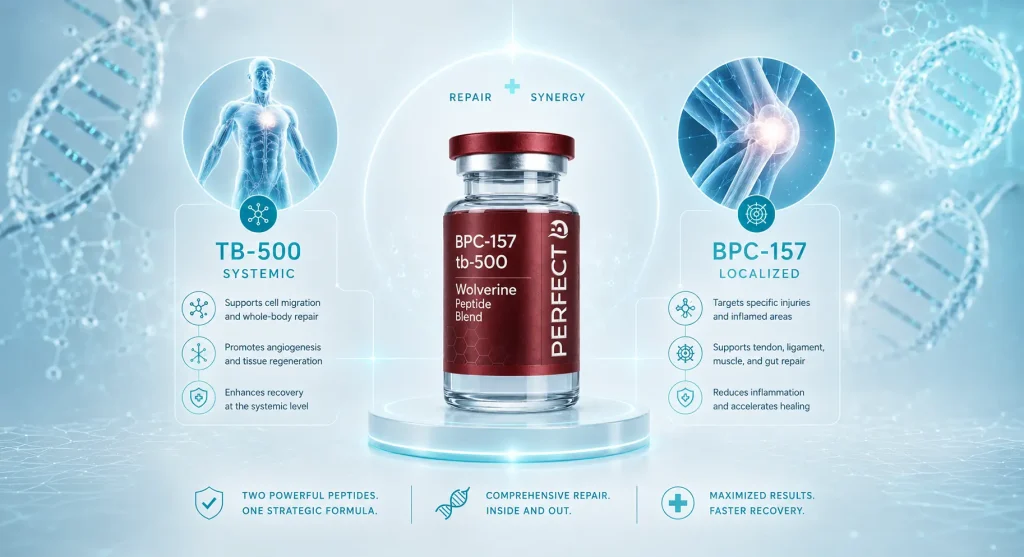
(2007) : key role in post-ischemic healing and progenitor cell mobilization BPC-157 + TB-500 synergy: the stack that changes everything Animal model publications have suggested that BPC-157 + TB-500 co-administration produces tissue repair superior to the sum of the two isolated effects
A double-blind study
0.25mg dose: Draw to 10 units 0.5mg dose: Draw to 20 units 1.0mg dose: Draw to 40 units 1.7mg dose: Draw to 68 units 2.0mg dose: Draw to 80 units 2.4mg dose: Draw to 96 units Notice how each dose falls on a round number
Also discard it if the vial was left unrefrigerated after mixing, froze accidentally, or was handled with questionable sterile technique